The magic of the silver screen has always been about more than just a good script or charismatic actors. For the modern undergraduate, especially those in STEM fields, watching a blockbuster like Interstellar or Iron Man isn’t just an escape—it’s an unofficial physics and engineering seminar. We live in an era where “movie magic” is increasingly grounded in real-world mechanics. Directors are no longer satisfied with “technobabble”; they hire consultants from NASA and prestigious universities to ensure that the gravity on a distant planet or the structural integrity of a collapsing bridge feels authentic to the audience.
However, the life of a student is often far less glamorous than the high-stakes world of cinematic engineering. While Tony Stark can build a fusion reactor in a cave with a box of scraps, a student in London or Manchester might struggle just to find a quiet library spot during finals week. The sheer volume of technical reports and literature reviews required in the British higher education system is immense. When the pressure of these deadlines starts to mirror the ticking clock of a Hollywood thriller, many students find that seeking professional assignment writing help UK from services like MyAssignmentHelp is the most strategic move to keep their “production” on track and maintain their GPA.
The Physics of Flight: Beyond the Cape
One of the most persistent tropes in cinema is the “superhero landing” or the effortless flight of a mechanized suit. In reality, the mechanics of flight involve a delicate balance of lift, weight, thrust, and drag. When we see a character like Iron Man hovering, we are looking at a complex application of propulsion theory. Engineers analyze these scenes to see if the thrusters are positioned correctly relative to the center of mass. If they weren’t, the character would simply spin out of control.
This level of detail is what makes a film immersive. If the mechanics are wrong, the “suspense of disbelief” breaks. For a student studying fluid dynamics or aerodynamics, these scenes serve as perfect case studies. You can actually calculate the force required for a 200lb man in a 400lb suit to achieve vertical takeoff, which makes for a fascinating, if difficult, homework problem.
Structural Integrity and the “Bridge Collapse” Trope
From Final Destination to The Dark Knight Rises, bridges are the favorite victims of action movie directors. But how realistic are these collapses? Civil engineering students often point out that real-world structures are designed with “redundancy.” This means if one cable snaps, the others are designed to take the load.
Movies often exaggerate these failures for dramatic effect, showing a single bolt pop and the entire suspension system failing instantly. While this makes for great IMAX footage, the real-world math is much more stable. Understanding these stress-strain relationships is a core part of an engineering degree, though translating that math into a 3,000-word paper is where the real stress lies.
The Role of Software in Cinematic Design
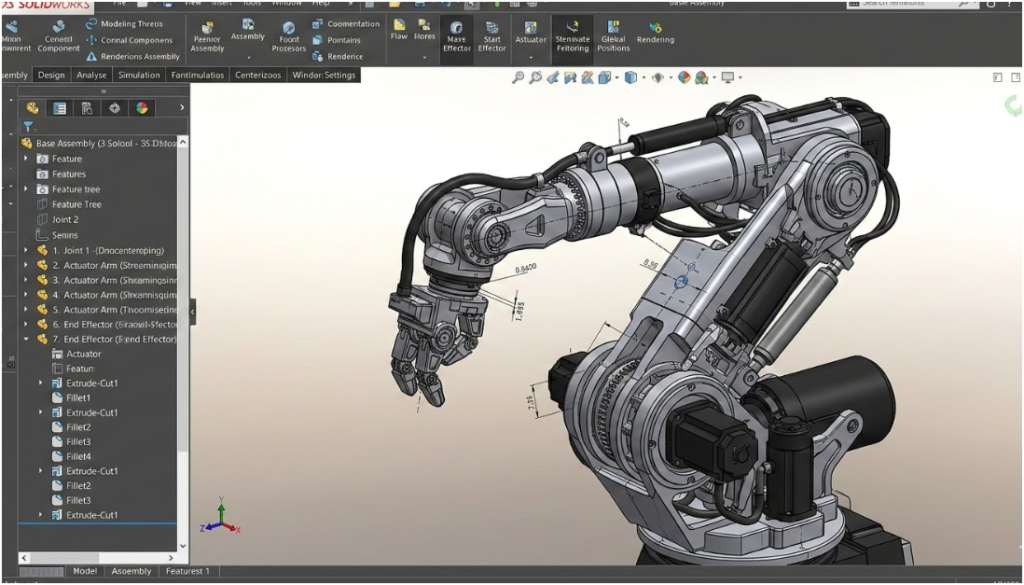
We cannot talk about modern movie mechanics without discussing CAD (Computer-Aided Design). In the “behind the scenes” features of movies like Transformers or Avatar, you’ll see designers using sophisticated software to build every gear and piston of a robot. This is where the line between cinema and the classroom thins out.
For many undergraduates, the transition from theoretical physics to practical design happens through software. If you are pursuing a degree in mechanical or industrial engineering, you know that mastering tools like SolidWorks is non-negotiable. It is the industry standard for creating the blueprints that eventually become real-world machines. However, the learning curve is steep. Between attending lectures and studying for exams, finding the time to master complex assemblies can be daunting. This is why many future engineers utilize SolidWorks assignment help through MyAssignmentHelp to ensure their technical drawings meet the rigorous standards of their professors while they focus on the broader concepts of design.
Why Realism Matters to the Audience
You might wonder why a director would spend millions making sure the black hole in Interstellar looks scientifically accurate. The answer is Visual Integrity. In a world where audiences are more educated than ever, “faking it” doesn’t work. When a film respects the laws of physics, the emotional stakes feel higher. If the hero is hanging from a ledge, and the way his weight shifts looks “right” according to the laws of gravity, the audience feels the tension in their own chests.
Comparing Movie Science vs. Real Science
To better understand how Hollywood treats mechanics, let’s look at a few common comparisons:
| Cinematic Concept | Movie Version | Real-World Mechanic |
| Space Sound | Explosions make a loud “boom.” | Vacuum of space prevents sound waves from traveling. |
| Explosions | Massive fireballs that throw people back. | Pressure waves (shockwaves) are the real danger, not just fire. |
| Computers | “Hacking” involves flashy 3D interfaces. | Most “engineering” software is data-heavy and requires precise input. |
| Gravity | Artificial gravity is always “on” without explanation. | Requires centrifugal force (spinning) to simulate weight. |
The “Genius” Myth vs. Academic Reality
Movies love the “lone genius” trope—the student who stays up all night, writes a groundbreaking formula on a window, and changes the world. In the global education landscape, success is rarely that cinematic. It is a slow, methodical process of research, drafting, and peer review.
For international students or those in high-pressure programs, the goal isn’t just to be a genius; it’s to be consistent. This consistency is often supported by external resources. Whether it’s a tutor, a study group, or a specialized writing service, the “engineering” of a successful degree requires a support system.
Final Thoughts on Cinematic Mechanics
The next time you watch a blockbuster, look past the actors and focus on the background. Notice the way the light hits a metallic surface, or how a building sways during an earthquake scene. These are the results of thousands of hours of work by engineers, digital artists, and scientists.
As a student, you are training to be the person who understands these mechanics for real. It’s a difficult path, but it’s the one that builds the future. Don’t be afraid to use the tools and services available to you to make sure your academic journey is as successful as a summer premiere.
Frequently Asked Questions (FAQ)
1. Why do movies get physics wrong so often?
Usually, it’s for “the rule of cool.” If a scene is more exciting when it breaks the laws of physics, directors will often choose entertainment over accuracy. However, modern audiences are demanding more realism, which is why consultants are now common on sets.
2. Is it hard for engineering students to watch action movies?
It can be! Once you understand how structures work, it’s hard not to notice when a movie bridge collapses in a way that’s physically impossible. But most students enjoy the “spectacle” regardless.
3. How can I improve my technical writing for engineering assignments?
Focus on clarity and data. Unlike creative writing, technical writing should be concise. Using professional help can also provide a template for how a high-distinction paper should be structured.
4. What is the most realistic “science” movie?
Interstellar and The Martian are widely considered the gold standard for blending cinematic storytelling with real-world mechanical and scientific principles.
5. How does MyAssignmentHelp assist with technical subjects?
They provide experts who specialize in specific niches—like SolidWorks or UK-specific academic standards—to help students understand complex topics and meet tight deadlines without sacrificing quality.
About The Author: Ruby Walker
I am an academic consultant and digital strategist with a passion for helping students bridge the gap between complex theory and practical application. With several years of experience collaborating with MyAssignmentHelp, I specialize in deconstructing rigorous academic standards—particularly within the UK and Australian education systems—into manageable, high-impact learning strategies.