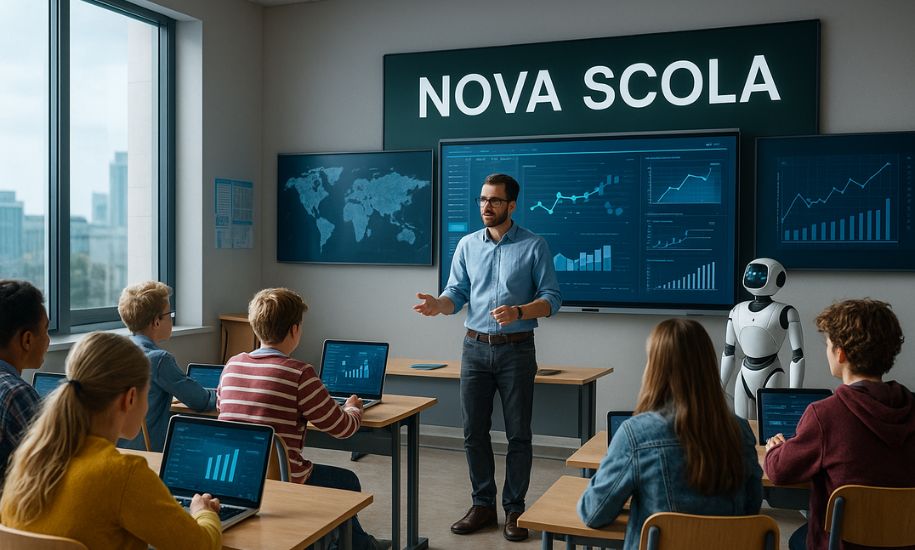
Education is moving faster than ever. Classrooms that once relied on chalkboards and heavy textbooks are now buzzing with digital tools, flexible learning styles, and a whole new philosophy of how students should grow. In the middle of this transformation, one phrase keeps popping up more and more: Nova Scola.
At first glance, it sounds like the name of a school. But the truth is more interesting. “Nova Scola” isn’t just a building or an institution. It’s becoming a symbol, a concept, and in many cases, a movement—one that reflects a fresh and forward-thinking approach to how we learn and teach.
This article dives deep into what Nova Scola really means, why so many Blogs and Education platforms talk about it, and how its ideas could shape the future of learning around the world.
What Does “Nova Scola” Mean?
The term Nova Scola comes from a blend of Latin and modern Romance languages:
- Nova = “new”
- Scola / Schola = “school” or “place of learning”
Put together, you get “New School.”
This simple translation is the foundation of everything the concept represents: a new school of education, a new school of thought, and a new school of values, all designed for a world that is changing at lightning speed.
But the meaning goes deeper. Across blogs, articles, and emerging educational brands, Nova Scola is being used in three major ways:
- As the name for education consultancies, especially those helping international students.
- As a philosophy of learning that promotes creativity, adaptability, and modern skills.
- As a metaphor for a broader shift away from traditional education systems.
This makes Nova Scola versatile—and part of the reason why the keyword is drawing attention globally.
Nova Scola as an Educational Institution & Brand
One of the more concrete uses of the name is found in organizations like Nova Scola Education Consulting, which guide international students toward studying in countries like Canada. These organizations use the phrase “Nova Scola” literally: a gateway to a “new school” and a new future.
Their services typically include:
- Student guidance and admissions support
- Long-term consultation on studying abroad
- Assistance with cultural transition
- Educational roadmaps for families
These institutions reflect the literal meaning of the term. But beyond helping students relocate, their branding reinforces the broader idea—modern, global, future-ready learning.
However, the greater popularity of Nova Scola comes from the conceptual, not just the institutional.
The “Nova Scola Concept”: A New Vision for Education
Across blogging platforms and modern digital education hubs, Nova Scola is described as a fresh blueprint for learning. It stands in contrast to the rigid, exam-centered systems of the past and introduces a human-focused, tech-friendly model built for the 21st century.
Here are the big ideas that define the Nova Scola philosophy:
1. Student-Centered Learning Over Traditional Teaching
Traditional classrooms tend to focus on:
- memorization,
- fixed lesson plans,
- and one-directional teaching.
Nova Scola flips this model. It encourages:
- personalized learning paths,
- hands-on projects,
- discussions and collaboration,
- and flexible pacing that adapts to individual needs.
Instead of shaping every student to fit the system, Nova Scola shapes the system around the student.
2. Creativity & Critical Thinking
Rather than rewarding students for memorizing answers, Nova Scola promotes:
- problem-solving,
- idea generation,
- analysis,
- experimentation,
- and curiosity.
This shift is important because the modern world doesn’t reward those who know the most information—it rewards those who know how to use information.
3. Technology as a Core Learning Tool
From smartboards to AI-powered learning apps, technology is no longer optional. Nova Scola embraces:
- blended and hybrid learning models
- digital classrooms
- interactive tools
- remote and global collaboration
- personalized AI learning companions
The goal isn’t just to use technology—it’s to use it intentionally, making learning accessible anywhere and anytime.
4. Holistic Skill Development
Beyond academics, Nova Scola emphasizes essential life skills:
- emotional intelligence
- communication
- leadership
- teamwork
- adaptability
- decision-making
This creates students who are not only academically smart but also socially capable and future-ready.
5. Blending Old Wisdom with New Methods
Interestingly, Nova Scola doesn’t reject classic education entirely. Many interpretations describe it as a balanced mix of:
- classical liberal-arts thinking
- modern logic and creativity
- digital-age tools
- flexible curriculum philosophies
Think of it as “old school meets new school”—a combination of depth and innovation.
Why Is Nova Scola Gaining Attention Now?
The timing is no coincidence. The world is evolving fast:
- Artificial intelligence is reshaping careers.
- Remote jobs are becoming normal.
- Innovation is happening at lightning speed.
- Traditional school systems are struggling to keep up.
Parents, students, and educators are searching for a better way—a system that is just as dynamic as the world outside the classroom. Nova Scola represents that better way.
This is why blogs from multiple countries—India, Brazil, Turkey, the US, and more—are referencing it in discussions about future education.
Comparing Nova Scola With “Nova Escola” in Brazil
A common point of confusion is the similarity between Nova Scola and Nova Escola (with an “e”). Nova Escola is a major nonprofit in Brazil dedicated to improving teacher training and educational resources.
While the names sound alike, they represent different things:
- Nova Escola is a real organization with a decades-long history.
- Nova Scola is a broader, global concept (plus some smaller organizations using the name).
Still, the similarity highlights a global trend: everyone is searching for a “new school” model, even if the exact name varies.
Challenges Nova Scola Faces
No education movement is perfect. Nova Scola’s growth comes with obstacles:
1. Technology Costs
Many regions still lack affordable devices or internet access.
2. Teacher Training
Modern methods require teachers to upskill constantly.
3. Student Distraction
Tech can improve learning—or it can overwhelm students.
4. Inequality
Rich schools advance faster than underfunded ones, widening gaps.
5. Cultural Barriers
Traditional mindsets can resist rapid innovation.
Understanding these challenges is important because solving them is part of what makes the Nova Scola model sustainable.
The Future of Nova Scola
Looking ahead, Nova Scola is positioned to grow into something even more powerful:
- More hybrid learning models blending physical and digital classrooms
- Stronger integration of AI into individualized learning
- Global collaboration between students in different countries
- A shift toward lifelong learning, not just school-based education
- Schools adopting “new school” frameworks for future-proofed curriculums
Nova Scola isn’t just a passing trend—it’s part of a larger global transformation. Whether it becomes a widely adopted model or inspires new variations, its influence is unmistakable.
Final Thoughts: Why Nova Scola Matters Today
In the end, Nova Scola isn’t about replacing old systems overnight. It’s about imagining better possibilities for the next generation and taking steps toward them. It stands for creativity, flexibility, innovation, and global thinking—qualities that define the modern world.
If education wants to keep up with the times, it needs a philosophy like Nova Scola guiding its evolution. For students, educators, and parents, understanding this model isn’t just useful—it’s essential.
This article is published for readers of Movies Mod, where we explore trends, ideas, and modern transformations shaping our world.