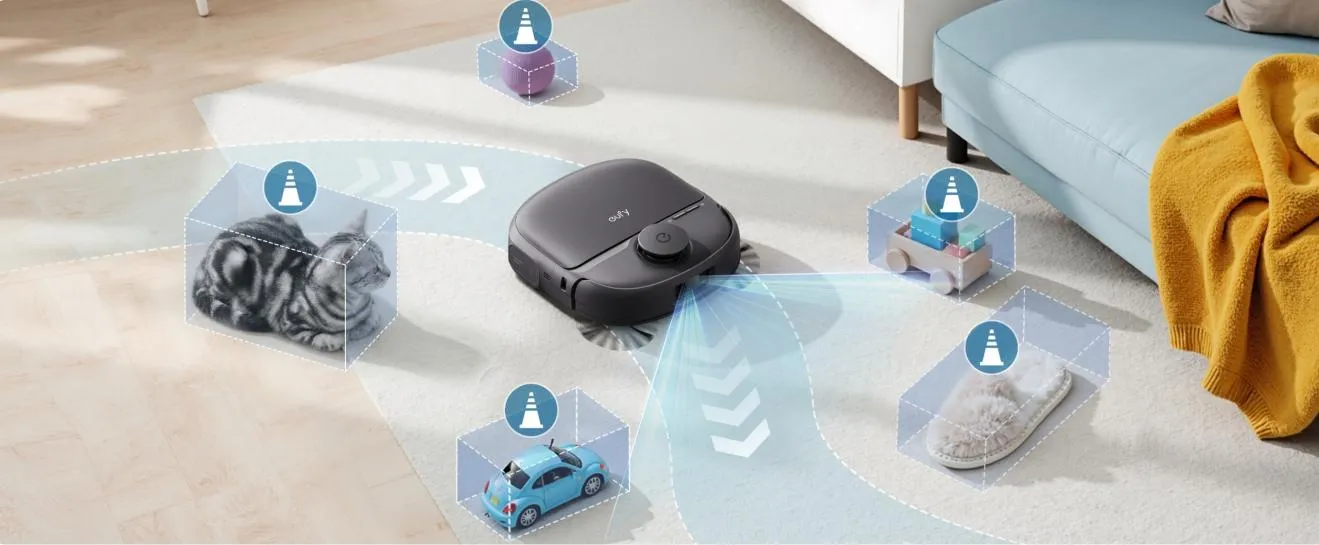
Robot vacuums promise cleaner carpets with almost no effort, but results vary a lot between models. Some units glide over carpets and barely lift surface dust. Others dig deep and pull out pet hair and grit you did not know was there. Carpet type also matters, from low‑pile rugs to plush bedroom carpets. Strong suction, smart navigation, and good brushes decide who wins. Newer models, such as the eufy Omni C28 with 15,000 Pa suction, close the gap with traditional vacuums. Understanding how these features work helps you pick a robot that actually cleans, not just roams around.
How Robot Vacuums Work on Carpeted Floors?
Robot vacuums for carpets rely on a simple but powerful system: suction, brushes, and sensors. The motor creates airflow that pulls dirt out of carpet fibres. A main brush agitates and loosens debris, while side brushes flick crumbs and hair toward the intake. Sensors guide the robot around furniture and help it cross thresholds and climb onto rugs. Some robots detect carpet and automatically increase suction for deeper cleaning. Models like the eufy Omni C28 combine strong suction with a DuoSpiral Hair Brush and iPath 2.0 navigation, so they can track where they cleaned and focus more on dirtier carpeted areas.
Key Factors That Affect Carpet Cleaning Performance
Suction Power and Deep Dirt Removal
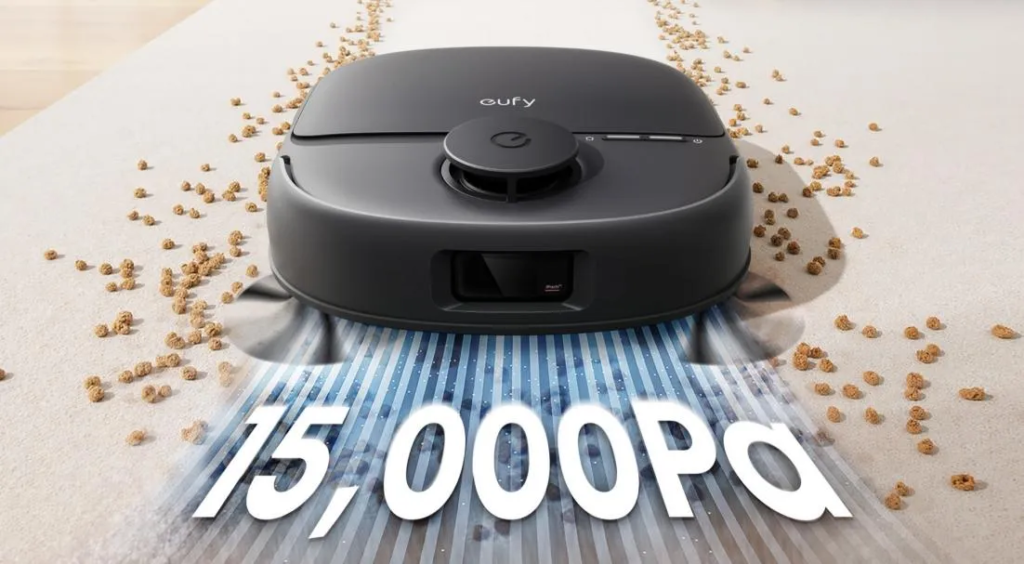
Suction power plays a huge role in how well robot vacuums clean carpets. Low-suction robots mostly remove surface dust and light crumbs. High-suction models can draw out heavier grit and pet dander embedded in fibres. For example, the eufy Omni C28 offers 15,000 Pa suction, which ranks among the strongest in consumer robot vacuums. That power helps it pull dirt from medium and even some high‑pile carpets. However, suction alone does not tell the full story. Airflow design, seal around the brush, and carpet boost modes also matter. Look for robots that increase power automatically when they sense carpet.
Brush Design and Hair Pickup Efficiency
Brush design determines how well a robot vacuum lifts dirt and hair from carpet. Bristle brushes scrub fibres but may tangle with long hair. Rubber or hybrid brushes resist tangles and maintain close contact with the carpet surface. The DuoSpiral Hair Brush on the eufy Omni C28 uses a spiral layout to gather hair and channel it into the suction path. This design reduces clogs and improves pickup in homes with pets and long hair. A wide main brush covers more area in one pass, while side brushes help clean edges and near furniture, where hair and dust usually collect.
Navigation, Sensors, and Carpet Detection
Navigation quality decides whether a robot cleans carpets thoroughly or misses spots. Basic robots bounce randomly and often skip areas or over‑clean others. Advanced models use systems like iPath 2.0 to map your home and follow efficient rows on carpets. They remember room layouts, avoid repeated passes, and return to missed zones. Floor sensors help the robot detect carpet, adjust suction, and manage transitions between hard floors and rugs. Cliff sensors prevent falls on stairs. Some units even recognize thick rugs as obstacles. Good navigation paired with reliable carpet detection ensures consistent coverage, fewer tangles, and better cleaning in real homes.
Tips to Improve Robot Vacuum Performance on Carpets
Cleaning Schedules and Maintenance Habits
Regular use and simple care keep your robot vacuum effective on carpets. Set a daily or every‑other‑day schedule so dirt never builds up too much. Empty the dustbin after each run, especially in homes with pets or kids. Check the main brush and side brushes for wrapped hair and cut it away. Clean or replace filters as the manual suggests to maintain strong suction. Inspect sensors and wipe them gently so navigation stays accurate. If your robot offers app reports, review them to see missed areas and adjust timing or modes for better carpet results.
Setup Tips for Better Coverage and Efficiency
A good setup lets your robot vacuum clean carpets more completely and with fewer interruptions. Remove loose cables, small toys, and long curtains that can wrap around the DuoSpiral Hair Brush. Secure rug edges with non‑slip pads so the robot can climb without folding them. Close doors to rooms you do not want it to enter, or use virtual boundaries in the app when available. Place the charging dock on a firm surface with open space around it, not on thick carpet. For models with iPath 2.0 or similar mapping, run several full cleanings so the robot learns every carpeted area.
Conclusion
Robot vacuums can clean carpets very effectively when they combine strong suction, smart navigation, and a well‑designed brush. Models with high power, such as the eufy Omni C28 and its 15,000 Pa suction and DuoSpiral Hair Brush, remove more embedded dirt and hair than earlier generations. Features like iPath 2.0 mapping and carpet detection improve coverage and efficiency. Still, results depend on carpet type, home layout, and how you maintain the device. Use regular schedules, simple prep, and basic cleaning habits. With the right model and setup, a robot vacuum can keep your carpets noticeably cleaner with minimal effort.